June 23, 2026
The Future of On-Site Gas Generation: Trends in Industrial Hydrogen Production
1. Introduction
With the global energy transition and the tightening of industrial carbon emission standards, hydrogen energy has become a core clean energy source for modern manufacturing. Traditional industrial hydrogen supply relies on outsourced bottled hydrogen and long-distance pipeline transportation, which faces high costs, supply instability, and transportation safety risks. On-site hydrogen generation technology has gradually become the mainstream solution for industrial gas supply, driving major changes in the industrial hydrogen production industry.
On-site hydrogen generation means enterprises deploy professional hydrogen production equipment in factories to realize real-time hydrogen production and self-use. This article analyzes the latest development trends of on-site industrial hydrogen production, covering technical iteration, energy efficiency upgrading, scenario popularization and low-carbon optimization, providing professional reference for industrial energy transformation.
2. Overview of On-Site Industrial Hydrogen Generation
Different from traditional centralized hydrogen production and external procurement, on-site hydrogen generation is a decentralized gas supply mode. It mainly includes water electrolysis, natural gas reforming, and industrial by-product hydrogen purification. The whole process realizes integrated production and supply, eliminating links such as long-distance transportation, storage and secondary handling.
This on-site gas generation mode features flexible deployment, independent supply and adjustable output. It can adapt to the fluctuating hydrogen demand of different industries, and effectively solve the pain points of insufficient hydrogen supply, high comprehensive cost and low safety factor in traditional industrial production.
3. Core Development Trends of Industrial On-Site Hydrogen Production
Low-Carbon & Green Hydrogen Production Becomes the Mainstream
Driven by global carbon neutrality policies, industrial hydrogen production is gradually shifting from gray hydrogen and blue hydrogen to green hydrogen. More manufacturing enterprises abandon high-pollution fossil fuel hydrogen production processes and adopt renewable energy power electrolysis water hydrogen production. On-site green hydrogen generation perfectly matches the zero-carbon production needs of new energy, chemical and electronic industries, and has become the primary development direction of the industry.
Intelligent and Fully Automatic Operation Iteration
Modern on-site hydrogen generation equipment realizes full intelligent control. It supports automatic start-stop, real-time hydrogen output adjustment, online monitoring of gas purity and remote fault diagnosis. Compared with traditional equipment requiring manual duty, intelligent on-site hydrogen production systems reduce labor costs, avoid human operation errors, and ensure stable and continuous hydrogen supply for 24 hours.
High-Efficiency and Low-Energy-Consumption Technical Upgrading
Energy consumption has always been the core factor restricting the promotion of on-site hydrogen production. In recent years, with the iteration of electrolyzer and reformer technologies, the energy consumption per unit of hydrogen production has been significantly reduced. New high-efficiency membrane materials and catalytic technologies greatly improve hydrogen production efficiency, shorten production cycle, and reduce enterprise daily operation and energy costs.
Modular and Skid-Mounted Integrated Design
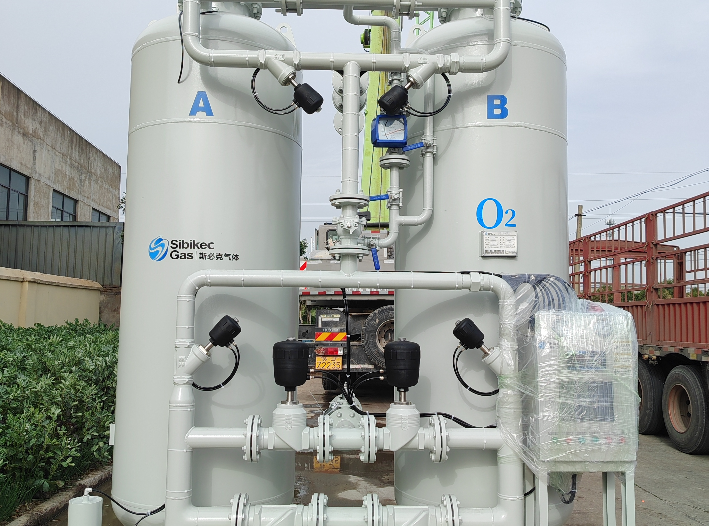
Future on-site hydrogen generation equipment presents modular and skid-mounted characteristics. The integrated design of hydrogen production, purification, drying and control system realizes plug-and-play deployment. It is convenient for factory installation, displacement and capacity expansion, solving the problems of large occupied space, complicated installation and difficult capacity adjustment of traditional hydrogen production equipment.
Wide Popularization in Diversified Industrial Scenarios
On-site hydrogen production is no longer limited to large-scale chemical and energy enterprises. With the reduction of equipment cost and miniaturization of volume, it is widely applied in electronic manufacturing, metal heat treatment, food processing, laboratory gas supply and new energy battery production. Diversified customized hydrogen production solutions become a key trend to meet the differentiated demand of small and medium-sized enterprises.
4. Mainstream On-Site Hydrogen Production Technology Comparison
Technology Type | Advantages | Disadvantages | Applicable Scenarios |
Water Electrolysis Hydrogen Production | High purity, zero pollution, simple process, green and low carbon | High power consumption, dependent on electric energy cost | Electronics, laboratory, high-purity hydrogen demand scenarios |
Natural Gas Reforming Hydrogen Production | Low energy consumption, large output, stable operation | Certain carbon emission, dependent on natural gas resources | Large chemical plants, industrial heat treatment |
By-Product Hydrogen Purification | Cost-effective, waste resource recycling | Unstable raw material supply, limited production capacity | Petrochemical and chemical supporting production |
5. Industrial Application Prospects
On-site hydrogen generation breaks the bottleneck of traditional hydrogen supply and provides flexible, safe and low-cost gas supply solutions for industrial production. With the continuous maturity of green energy technology and the continuous decline of equipment manufacturing costs, on-site hydrogen production will gradually replace the traditional hydrogen procurement mode and become the standard configuration of modern industrial factories.
In the fields of hydrogen energy power generation, fuel cell manufacturing, precision electronic processing and environmental protection chemical industry, the market penetration of on-site hydrogen generation equipment will continue to increase, helping the whole industry realize energy saving, emission reduction and green upgrading.
6. Conclusion
The future of industrial gas generation is centered on on-site, green, intelligent and low-cost hydrogen production. Technological upgrading, intelligent control, modular deployment and scenario diversification are the core trends of the industry. On-site hydrogen generation not only solves the practical problems of traditional hydrogen supply, but also empowers the high-quality and low-carbon development of modern industry, which is an inevitable direction of global industrial energy transformation in the future.